Diagnosing Short Cycling in Sammamish Homes: When to Repair vs Replace

The First Chills of Fall: Understanding Short Cycling in Your Sammamish Home
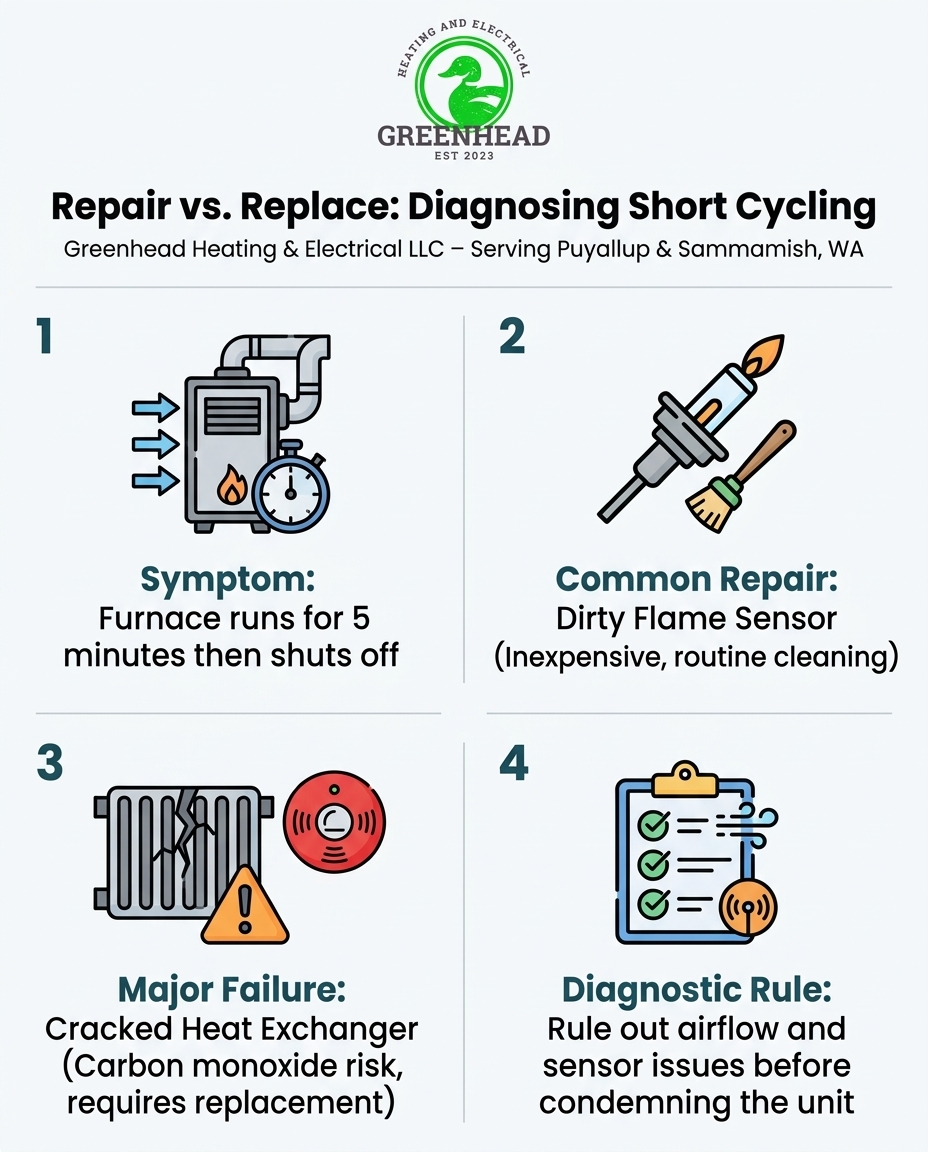
September brings the first chilly mornings to the Pacific Northwest, which means it is time for diagnosing short cycling in Sammamish homes: when to repair vs replace is a question you might face if your system shuts down prematurely. You wake up, adjust the thermostat to shake off the autumn dampness, and hear the furnace fire up. But instead of delivering a steady stream of warmth, the unit shuts off just a few minutes later. This rapid on-and-off behavior is a concrete problem known as short cycling, and it completely fails to properly heat your home.
When this happens during the September pre-heating season, you are faced with a major decision point. Is your standard residential gas furnace suffering from a minor sensor malfunction, or are you looking at a critical structural failure? A professional diagnosis will pinpoint the exact cause without unnecessary upselling, getting your home comfortable again.
If you need help with heating systems, our team provides expert HVAC repair and replacement.
What Exactly Is HVAC Short Cycling?
To understand why rapid shutdowns are so damaging, you have to look at how a standard residential gas furnace is designed to operate. A normal, efficient heating cycle runs for roughly ten to fifteen minutes. During this time, the system goes through a specific sequence: the draft inducer motor clears residual gases, the ignitor glows, the gas valve opens, the burners light, and finally, the main blower fan pushes that warm air throughout your home. Once the target temperature is reached, the system gracefully shuts down and rests.
Short cycling interrupts this sequence entirely. Instead of running a full cycle, the furnace fires up and shuts down in quick bursts—sometimes lasting only two or three minutes. This is not just annoying; it is incredibly hard on the equipment.
The Toll of Rapid Shutdowns
Every time a furnace starts, it draws a surge of electricity and places mechanical stress on moving parts. When a system short cycles, it accelerates wear and tear on blower motors and ignitors at an alarming rate. Parts that should last for a decade can burn out in a matter of seasons under the strain of continuous restarting.
Furthermore, short cycling destroys your energy efficiency. Furnaces use the most energy during the startup phase. If your system is starting up five times as often as it should, your utility bills will spike, even though your house still feels cold. You might also notice other symptoms accompanying the rapid shutdowns, making troubleshooting strange HVAC noises a necessary part of figuring out what went wrong.
• Cycle Duration — Normal Heating Cycle: 10 to 15 minutes — Short Cycling Operation: 2 to 5 minutes
• Component Wear — Normal Heating Cycle: Standard, gradual wear — Short Cycling Operation: Accelerated, high-stress wear
• Energy Efficiency — Normal Heating Cycle: High (steady operation) — Short Cycling Operation: Low (constant startup surges)
• Home Comfort — Normal Heating Cycle: Even, consistent temperatures — Short Cycling Operation: Drafty, uneven heating
The Simple Fix: When a Dirty Flame Sensor Triggers Shutdowns
The Problem: Unexplained Premature Shutdowns
One of the most frequent reasons a standard residential gas furnace short cycles in early fall involves a tiny, inexpensive component: the flame sensor. The flame sensor is a critical safety device located right in front of the burners. Its only job is to detect whether a fire is actually burning once the gas valve opens. If it does not sense a flame within a few seconds, it immediately shuts off the gas to prevent raw fuel from flooding your home.
The Cause: Summer Stagnation and Damp Climates
The damp Pacific Northwest climate and months of summer stagnation create the perfect storm for flame sensor issues. Throughout the long off-season, microscopic dust, pet dander, and airborne moisture settle inside the furnace cabinet. This debris coats the thin metal rod of the flame sensor. By the time September rolls around and you turn the heat on for the first time, that layer of dust acts as an insulator. The burners ignite perfectly, but the coated sensor cannot feel the heat. Assuming the burners failed to light, the safety mechanism triggers a rapid shutdown.
The Solution: Professional Cleaning and Verification
The good news is that a dirty flame sensor is a straightforward, affordable repair for a professional. A technician will carefully extract the sensor, clean the metal rod with specialized abrasive materials, and test the microamp reading to ensure it is communicating properly with the control board.
We see this scenario frequently. One local homeowner experienced a sudden loss of heat on a particularly cold day. A technician arrived the same afternoon, quickly found the exact issue, and took the time to explain everything clearly before resolving it with fair, honest service.
A strict safety warning: You must never attempt a DIY flame sensor cleaning or inspection. Modern furnaces operate using high-voltage electricity and combustible natural gas. Removing panels, manipulating safety switches, or handling gas components without proper licensing poses severe fire, explosion, and electrocution hazards. Always rely on a trained expert to handle the internal components of your heating system.
The Critical Failure: Identifying a Cracked Heat Exchanger
While a dirty flame sensor is a minor hiccup, short cycling can also point to the most severe failure a furnace can experience: a cracked heat exchanger. The heat exchanger is the metal chamber where the actual heat transfer takes place. Combustible gases burn safely inside this chamber, heating the metal walls. Your blower fan then pushes clean indoor air over the outside of these hot metal walls, warming the air before it travels through your vents.
The heat exchanger is designed to keep the toxic combustion gases entirely separate from the air your family breathes. However, years of continuous expansion and contraction—especially if exacerbated by the rapid temperature swings of short cycling—can cause metal fatigue. Eventually, the stressed metal develops hairline cracks or structural fractures.
The severe safety hazard: A cracked heat exchanger is incredibly dangerous. When the blower fan turns on, it changes the air pressure inside the furnace cabinet. This pressure difference can pull toxic gases, including deadly carbon monoxide, out of the combustion chamber and push them directly into your living space.
Because of the extreme temperatures and the critical safety function of this component, a cracked heat exchanger cannot be safely patched, welded, or repaired. If a fracture is discovered, the system is permanently condemned. You are left with two options: a major, highly intensive component replacement, or a full system upgrade to a modern furnace or one of the newer heat pump systems available today.
• Visual rust and corrosion: Flakes of rust around the base of the furnace often indicate moisture has compromised the heat exchanger.
• Soot buildup: Black soot near the registers or inside the cabinet points to incomplete combustion and potential cracks.
• Rolling flames: If the burner flames flicker, dance, or turn yellow when the blower fan kicks on, air is likely crossing through a crack in the chamber.
• Carbon monoxide alarms: If your home's CO detectors sound, evacuate immediately and call emergency services.
Transparent Testing: How We Diagnose Your System
When your furnace is short cycling, you need to know that the person inspecting it is looking out for your best interests. We emphasize transparent diagnostics, assuring Sammamish homeowners they will only be recommended a full replacement if a critical safety hazard is definitively proven. We believe in honest recommendations based on your specific needs. For example, when one homeowner was considering installing two split units to condition a space, our technician evaluated the layout and suggested a slim ducted system instead. This honest assessment resulted in a cleaner installation, a quieter room, and a more comfortable space. We bring this exact same level of transparency to diagnosing your furnace.
Here is the professional approach to diagnosing a short-cycling furnace:
1. Verify the Thermostat: Technicians begin by checking the thermostat calibration and placement. A thermostat located in direct sunlight or near a heat source will misread the room temperature, causing the system to shut off prematurely.
2. Inspect Airflow and Filtration: A severely clogged air filter restricts airflow, causing the furnace's internal temperature to skyrocket. The high-limit safety switch will trip, shutting the system down to prevent a fire. Technicians verify that the filter, blower wheel, and ductwork are clear.
3. Analyze the Ignition Sequence: The technician will monitor a full startup cycle, observing the draft inducer, the ignitor, and the flame sensor. Using a multimeter, they measure the microamp signal from the flame sensor to confirm whether it is communicating properly.
4. Perform Advanced Heat Exchanger Testing: If the basic components are functioning, the focus shifts to structural integrity. Technicians use advanced combustion analyzers to measure the exact levels of oxygen, carbon monoxide, and flue gases. Abnormal readings indicate a breach.
5. Conduct a Visual Inspection: Finally, technicians use specialized infrared cameras and inspection scopes to visually examine the heat exchanger walls, searching for the hairline fractures that confirm a failure.
A trustworthy diagnosis relies entirely on physical evidence and measurable data rather than guesswork. You will always be shown the results of these tests so you can make an informed decision.
Why Sammamish Homeowners Must Address Short Cycling Promptly
Sammamish's cool, damp transitional seasons require reliable, frequent heating cycles. When the dampness from the nearby lakes and dense tree canopies settles over the area in early fall, 50 degrees can feel bone-chilling. Your furnace needs to run a full, steady cycle not just to warm the air, but to effectively remove the ambient humidity from your living space.
Ignoring short cycling is a risky gamble. A furnace that struggles to stay on during the mild weather of September will almost certainly fail completely when the temperature drops below freezing. The rapid on-and-off cycling places immense strain on aging components. What might have started as a simple airflow issue or a dirty sensor can quickly escalate into a blown blower motor or a cracked heat exchanger if left unaddressed.
Prompt resolution of short cycling is critical to prevent sudden breakdowns during winter freezes. Having a fully inspected, professionally tuned heating system gives you the confidence that your home will stay warm and safe all season long. If you notice these warning signs, reaching out for HVAC services in Sammamish ensures the problem is caught early.
Deep Dive FAQ: Troubleshooting Short Cycling
Why does my furnace run for 5 minutes then shut off?
A furnace running for 5 minutes and then shutting off is the classic definition of short cycling. This happens when a safety switch inside the unit detects a problem and interrupts the heating cycle prematurely to prevent damage or fire. The immediate suspects are usually a dirty flame sensor that cannot detect the burner flame, a severely clogged air filter causing the unit to overheat, or a blocked exhaust flue. A professional technician will test each of these safety triggers to determine exactly which one is breaking the circuit.
Is short cycling bad for a furnace?
Yes, short cycling is extremely bad for a furnace and causes excessive wear on internal components. Every time the system starts up, the blower motor and ignition components endure a surge of electrical and mechanical stress. Over time, this constant stopping and starting significantly reduces the overall lifespan of the equipment. Furthermore, because furnaces use the most energy during the startup phase, short cycling causes your energy consumption and utility bills to spike dramatically.
Can a dirty flame sensor cause short cycling?
Yes, a dirty flame sensor is one of the most common causes of short cycling in residential furnaces. The sensor's job is to detect the heat of the burner flame; if it is coated in dust or carbon buildup, it fails to feel that heat. When the sensor fails to register the flame, the furnace's control board assumes the burners did not ignite and immediately shuts off the gas valve. This safety mechanism prevents unburned natural gas from building up inside your home, but it results in continuous rapid shutdowns until the sensor is cleaned.
When should I replace a short cycling furnace?
You should replace a short cycling furnace if the rapid shutdowns are caused by a cracked heat exchanger, repeated costly motor failures, or if the unit is exceeding 15 to 20 years of age. While a dirty sensor or a bad thermostat can be easily repaired, structural failures like a breached heat exchanger pose severe carbon monoxide risks and cannot be patched. We always recommend a professional evaluation to carefully weigh the cost of ongoing repairs against the long-term benefits and safety of a full system replacement.
How do professionals diagnose a cracked heat exchanger?
Professionals diagnose a cracked heat exchanger using a combination of advanced electronic testing and visual inspection. Technicians use digital combustion analyzers to test the exhaust gases; abnormal levels of oxygen or carbon monoxide in the airstream strongly indicate a crack. Additionally, they will use specialized inspection cameras and scopes to look deep inside the furnace cabinet, physically locating the hairline fractures or rust holes that confirm the metal has failed.
How does the Pacific Northwest climate affect my furnace's flame sensor?
The damp climate of the Pacific Northwest significantly accelerates buildup on furnace components during the off-season. Throughout the humid summer months, moisture mixes with household dust and pet dander, settling heavily inside the stagnant furnace cabinet. This creates a sticky, insulating layer on the flame sensor rod. When the heating season begins in the fall, this baked-on layer prevents the sensor from reading the flame properly, leading directly to short cycling behavior.
Get Honest Diagnostics for Your Heating System Today
Dealing with a furnace that refuses to stay running is frustrating, but you do not have to figure it out alone. A transparent, professional diagnosis is the only way to know for sure whether you need a simple sensor cleaning or a major system upgrade. Schedule an inspection to resolve your short cycling issues before the harsh winter weather arrives. Our technicians will provide a clear, reassuring breakdown of the problem, ensuring your home stays warm and safe all season long.
.svg)