prompt Emergency Heat Repair vs Next-Day Service: How We Triage Late-Night Furnace Calls
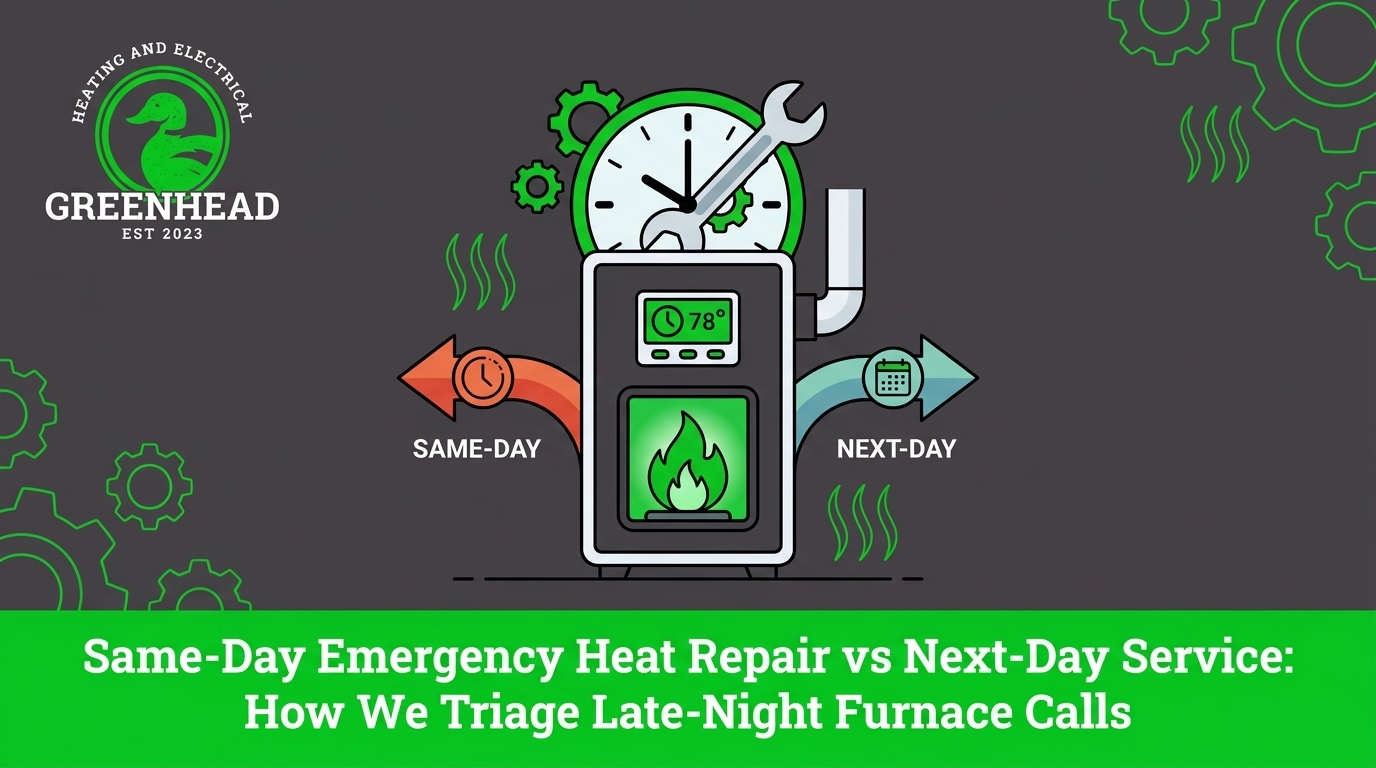
Is Your Late-Night Furnace Failure a True Emergency?
Is your furnace actually broken in a way that threatens your home, or is it just struggling to keep up? When the vents stop blowing warm air after dark, understanding prompt emergency heat repair vs next-day service: how we triage late-night furnace calls is the exact process you need to make a safe, logical decision. It is incredibly stressful to realize your heating system has failed, especially when the sun has gone down and the house is rapidly losing its residual warmth. The immediate reaction for most homeowners is to reach for the phone and dial the first available 24-hour dispatch line. However, not every heating hiccup requires a midnight visit from a technician.
For homeowners in Puyallup WA, deciding when to call for immediate help versus when to wait for regular business hours comes down to a careful evaluation of safety versus comfort. HVAC triage is the professional method of assessing the severity of a system failure. At Greenhead Heating & Electrical LLC, our dispatch team relies on years of hands-on local experience to evaluate these symptoms. Just like a medical professional evaluates symptoms to determine urgency, we use specific criteria to decide if a situation demands our immediate intervention. This guide will provide you with the exact, transparent dispatch criteria we use internally, empowering you to assess your immediate surroundings without panicking.
To get started on assessing your situation, you can review our comprehensive heating services to understand the full scope of how we support local homes. The goal is to ensure your family remains safe while avoiding the stress of an unnecessary late-night service call if the issue can be easily resolved the next morning.
The Psychology of a Late-Night Breakdown
When the house goes quiet and the familiar hum of the furnace is noticeably absent, it is easy for anxiety to set in. You might start worrying about frozen pipes, the comfort of your children, or the potential for a massive repair bill. This psychological pressure often drives the urge to request immediate after-hours service. By stepping back and applying professional triage standards, you can separate the immediate hazards from the mere inconveniences.
First Steps Before Making the Call
Before you make any decisions, take a moment to assess your immediate environment. Check your thermostat to see what the current indoor temperature is and note how quickly it is dropping. Ensure that all windows and doors are securely closed to trap the remaining heat. Listen for any unusual sounds coming from the furnace room, and be acutely aware of any strange odors. Gathering this baseline information will be critical when you do speak with a dispatcher, helping them guide you toward the most appropriate service timeline.
Safety vs. Comfort: The Baseline for After-Hours Dispatch
The core difference between a situation that requires immediate dispatch and one that can wait until morning is the distinction between a safety hazard and a comfort issue. A safety hazard is any condition that directly threatens the health of the occupants or the structural integrity of the property. A comfort issue, on the other hand, means the house is colder than you prefer, but everyone inside remains safe from extreme temperatures or dangerous equipment malfunctions.
The World Health Organization (WHO) provides clear guidelines on indoor temperatures and health risks. According to these standards, an indoor temperature dropping below 60°F begins to pose increased respiratory and cardiovascular risks, particularly for vulnerable populations. When the temperature inside your home crosses this critical threshold and continues to fall, the situation shifts rapidly from a comfort issue to a genuine safety concern. Safety issues always trigger an immediate emergency response.
The Pacific Northwest Climate Factor
In our region, the weather plays a massive role in how we perceive cold. Over our years keeping Puyallup families warm, our team typically sees that the damp Pacific Northwest air makes 50-degree nights feel significantly colder than they would in a dry climate. This heavy moisture pulls heat away from the body faster, increasing the urgency for functional heating even if the outside temperature isn't technically freezing yet. You might look at the outdoor thermometer and think it isn't too bad, but the indoor humidity combined with a failing furnace can quickly make the home unbearably chilly and physically taxing.
Establishing Your Temperature Baseline
If you suspect your heating system has failed, your first action should be to check your thermostat reading immediately to establish a baseline. Note the current temperature and check it again in thirty minutes. If the house is holding its temperature reasonably well because of good insulation, you likely have a comfort issue that can wait. If the temperature is plummeting rapidly toward that 60-degree mark, you are moving into safety hazard territory. Always prioritize factual readings over the physical sensation of feeling cold when communicating with a dispatch team.
Red Flags: When to Request Same-Day Emergency Heat Repair
There are specific scenarios where delaying service is simply not an option. When these red flags appear, you need to request immediate, same-day emergency heat repair to protect your home and your family. In these situations, the risk of waiting far outweighs any other consideration.
• Smell of rotten eggs or sulfur: This is the most critical red flag. A sulfur smell strongly indicates a potential natural gas leak. If you detect this odor, do not turn on lights, do not attempt to inspect the furnace, and do not use your cell phone inside the house. Evacuate the premises immediately and contact your local utility provider and emergency services. Only after the gas company has declared the home safe should you contact an HVAC professional.
• Rapidly dropping indoor temperatures: If your thermostat shows the indoor temperature dropping below 60°F and continuing to fall, you have an emergency. This is especially urgent if you have vulnerable individuals in the home, such as infants, elderly family members, or anyone with a compromised immune system.
• Electrical burning smells or sparking: If your complete system failure is accompanied by the acrid smell of burning plastic, ozone, or visible sparking near the unit, you have a severe electrical hazard. Turn off the power to the furnace at the main breaker panel immediately to prevent a potential fire, and call for emergency dispatch.
• Carbon monoxide detector alarms: If your carbon monoxide alarms sound, treat it with the same urgency as a gas leak. Evacuate the home, call emergency services, and do not re-enter until the home is cleared. A cracked heat exchanger can leak this odorless, deadly gas into your living space.
Real-World Emergency Responses
True emergencies require a dedicated, immediate response regardless of the external conditions. We recall one local homeowner who faced a complete system failure on the coldest day of the year, requiring a full furnace and heat pump installation. Because the situation posed a severe risk to the property and the family, our Greenhead Heating & Electrical crew worked all day in the snow to ensure the new equipment was safely installed and the home was thoroughly warmed. This level of dedication is exactly what our emergency dispatch is designed for.
If you are experiencing any of these critical warning signs, professional HVAC system troubleshooting is required immediately. Do not attempt to reset the system repeatedly or open the cabinet to investigate electrical smells yourself.
Green Lights: When Next-Day Service is the Smarter Choice
While a broken furnace is never convenient, there are many situations where waiting until morning is the most logical and practical choice. Recognizing these "green lights" can save you from unnecessary after-hours anxiety and allow you to schedule a standard appointment without the midnight rush.
Minor strange noises are a common green light. If your system is suddenly rattling, humming louder than usual, or squeaking, but the vents are still blowing warm air and the house is maintaining its temperature, the system is still functional. While the noise indicates a failing component that needs attention, it rarely constitutes an immediate safety threat. You can safely turn the system down slightly and wait for a morning appointment.
Short cycling is another issue that often feels urgent but can usually wait. If your furnace turns on, runs for a minute, and shuts off, it is short cycling. As long as the system is still producing enough heat to keep the home comfortable, you can read up on diagnosing short cycling and book a next-day visit. The system is inefficient, but it is not a direct hazard.
The Role of Home Insulation
If your house is well-insulated, it will retain heat remarkably well even after the furnace stops running. If your system fails in the evening, but the indoor temperature remains well above the 60-degree mark, your insulation is doing its job. You can safely bridge the gap until morning by keeping exterior doors closed and utilizing the trapped thermal energy.
Navigating Mild Weather Failures
The urgency of a heating failure is heavily dependent on the season. A breakdown during a September early-fall cold snap is vastly different from a failure in the dead of winter. A pattern we see often during these milder pre-heating-season transitions is that heavy blankets, warm clothing, and closing off unused rooms can easily and safely keep your family comfortable until our technicians arrive for regular business hours. Reassure yourself that booking a next-day morning appointment is often the most practical solution for non-safety-threatening issues.
Another customer reached out to us for evening service on their gas furnace and heat pump; because the situation was stable and the home was retaining heat, a standard next-day appointment provided professional, helpful service without the stress of an emergency midnight dispatch.
Comparing Your Options: Emergency vs. Next-Day Triage
Making a rapid go/no-go decision requires a clear understanding of what each service tier entails. The table below contrasts the typical scenarios, response times, and necessary homeowner actions for both immediate dispatch and next-day scheduling. Use this to quickly evaluate your current situation.
• Primary Trigger — prompt Emergency Dispatch: Safety hazard, extreme temperature drop, electrical risks. — Next-Day Standard Service: Comfort issue, strange noises, reduced efficiency.
• Indoor Temperature — prompt Emergency Dispatch: Rapidly dropping below 60°F. — Next-Day Standard Service: Holding steady above 60°F.
• System Status — prompt Emergency Dispatch: Complete failure, sparking, or burning smells. — Next-Day Standard Service: Still producing some heat, short cycling, or noisy.
• Homeowner Action — prompt Emergency Dispatch: Shut down system at breaker, evacuate if gas/CO suspected, call immediately. — Next-Day Standard Service: Monitor thermostat, use heavy blankets, book a morning appointment.
• Peace of Mind — prompt Emergency Dispatch: Immediate resolution to protect health and property. — Next-Day Standard Service: Practical, stress-free resolution during normal hours.
Transparent Dispatching Protects You
One of the core values we hold at Greenhead Heating & Electrical LLC when serving the Puyallup service area is absolute transparency in our dispatching process. We actively help customers evaluate their situation over the phone to determine if the issue can safely wait. By providing honest assessments, we protect homeowners from unnecessary after-hours dispatch premiums when a next-day appointment would serve them just as well. If we tell you it is an emergency, you can trust that it genuinely requires immediate attention.

Frequently Asked Questions About Late-Night Furnace Failures
What constitutes an HVAC emergency?
An HVAC emergency is any situation that threatens the immediate safety of your home or family. This includes the smell of natural gas, carbon monoxide alarms sounding, electrical burning odors, or the indoor temperature dropping below 60°F during freezing weather. If any of these factors are present, you need immediate professional intervention. Issues that only affect your comfort, like a noisy fan, are not considered true emergencies.
Can a broken furnace wait until morning?
Yes, a broken furnace can often wait until morning if the home is well-insulated and retaining heat safely above 60 degrees. If the failure happens during a mild weather pattern and you have plenty of heavy blankets, waiting is usually the most practical choice. However, if temperatures are plummeting rapidly or you have vulnerable family members, you should not wait.
Is no heat considered an emergency?
A complete lack of heat is only considered an emergency if the outdoor temperatures are cold enough to rapidly drop your indoor temperature to unsafe levels. If your furnace quits during a mild autumn evening, the lack of heat is an inconvenience, not a crisis. You must evaluate how quickly the house is losing its residual warmth to determine the true urgency.
Should I turn off my furnace if it is making a loud noise?
If your furnace is making a loud grinding, screeching, or banging noise, it is best to turn the system off at the thermostat. Continuing to run a system that is mechanically struggling can cause severe secondary damage to internal components like the blower motor. Once the system is off, you can safely schedule a diagnostic appointment for the following day.
What should I do if I smell gas near my furnace?
If you smell a sulfur or rotten egg odor near your furnace, you must evacuate the house immediately. Do not attempt to turn off the furnace, do not flip any light switches, and do not use your phone until you are safely outside. Call your local gas utility provider emergency line right away, as this indicates a highly dangerous natural gas leak.
At what indoor temperature do pipes risk freezing?
Pipes typically risk freezing when the temperature inside the walls and basements drops below 32°F, which usually means the main living areas have been sitting well below 50°F for an extended period. Because water expands when it freezes, burst pipes can cause catastrophic water damage. Maintaining an indoor temperature above 60°F provides a safe buffer to protect your plumbing infrastructure.
Make the Right Call for Your Furnace Tonight
Making the right decision during a late-night heating failure comes down to balancing your family's safety with practical timing. By understanding the clear distinction between a true emergency and a manageable comfort issue, you can navigate a sudden breakdown with confidence rather than panic. Whether you are dealing with a severe mid-winter failure or a minor hiccup during a September early-fall cold snap, assessing your thermostat, checking for immediate hazards, and evaluating your home's heat retention are your best first steps.
Reassure yourself that whether you truly need immediate, middle-of-the-night intervention or a standard morning appointment, our professional team is ready to restore your home's warmth safely and effectively. If you have run through the triage checklist and determined that your situation requires urgent attention, do not hesitate to act. When you are ready to secure your spot on our schedule, you can easily book an emergency repair and let our dispatch team handle the rest.
.svg)