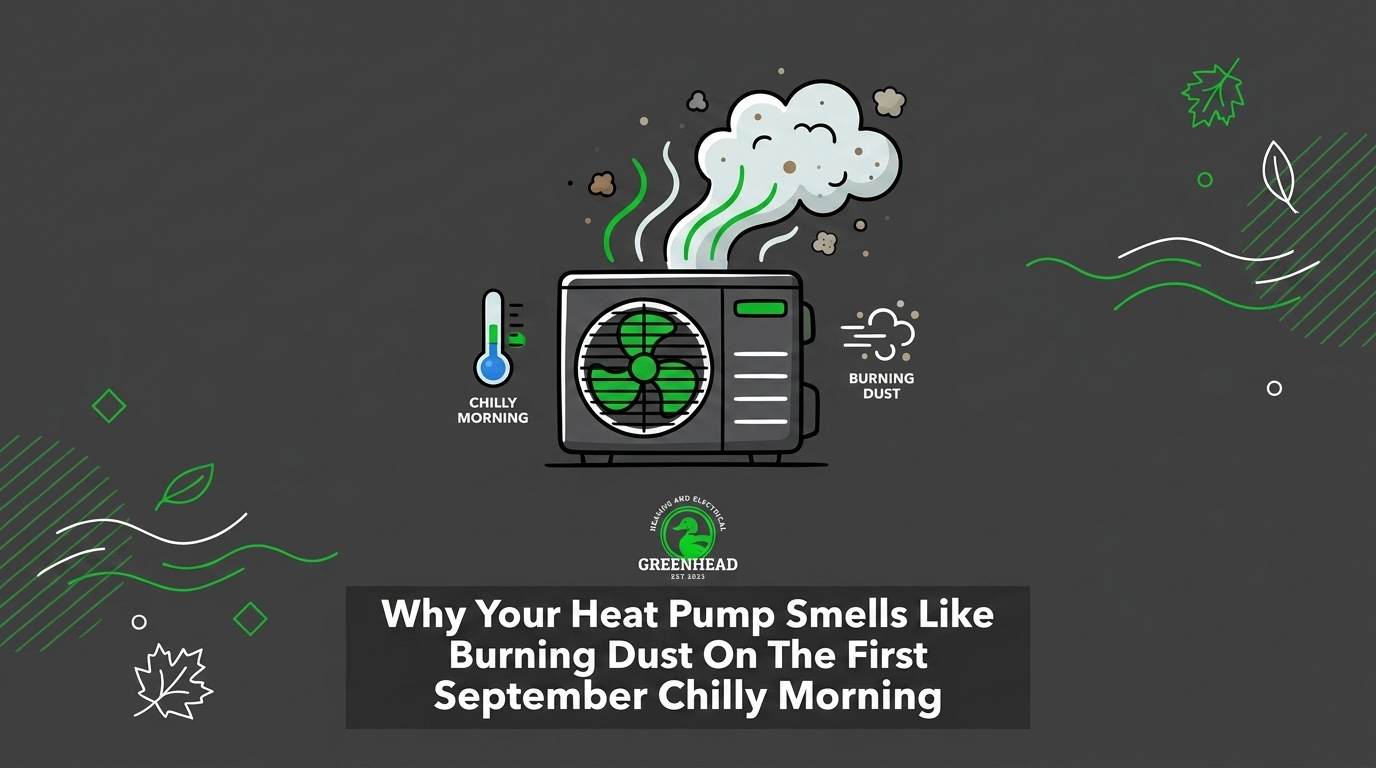
Why Your Heat Pump Smells Like Burning Dust On The First September Chilly Morning
Is Your Heat Pump Catching Fire, Or Is It Just Fall?
Is your home actually in danger, or are you just wondering why your heat pump smells like burning dust on the first September chilly morning? Waking up to a freezing house, hearing the heating system kick on for the first time in months, and immediately smelling something burning coming through the vents is enough to send any homeowner into a panic. You rush to check the vents, look for smoke, and wonder if you need to shut off the breaker before a fire starts.
Here is the good news: our team at Greenhead Heating & Electrical responds to dozens of these panicked calls every fall, and we can assure you that in the vast majority of cases, this sudden odor is a completely harmless, normal seasonal occurrence. When that first chilly September morning in the PNW finally arrives, your HVAC system undergoes a major operational shift. Heat pumps operate very differently than standard gas furnaces when transitioning to heating mode, relying on specific internal components that sit dormant all summer long. Learning how to definitively tell the difference between normal seasonal dust burn-off and a true electrical hazard is essential for your peace of mind. To ensure your equipment operates safely year-round, investing in professional heat pump systems care makes all the difference.
The Anatomy of the Smell: What Is Actually Burning?
To understand why your vents are producing that alarming scent, you have to look at what happens inside your air handler during the summer cooling months. While your system is busy pushing crisp, cold air through your home, microscopic particles of dust, pet dander, cooking oils, and general airborne debris continuously circulate. Over several months, a thin layer of this debris settles onto the inactive auxiliary heat strips located inside the indoor unit.
When the outdoor temperature drops and your thermostat hits the auxiliary heat strip engagement temperature, these electric resistance coils activate for the first time in over half a year. They heat up incredibly fast, and that accumulated layer of summer dust instantly incinerates. The smell you notice is literally months of settled debris flashing off the metal coils. This is an unavoidable byproduct of how the system is designed to provide supplemental heat when the primary heat pump needs an extra boost.
How Auxiliary Heat Strips Work
Understanding the mechanics behind these strips helps demystify the burning odor. These components are simple but highly effective:
• Secondary heat source: They act as a backup heating method when the primary heat pump struggles to extract enough heat from the frigid outdoor air.
• Toaster coil function: They function almost exactly like the glowing red electric coils inside a pop-up toaster or a hair dryer, generating intense heat through electrical resistance.
• High susceptibility to buildup: Because they sit directly in the path of the indoor airflow but remain cold for six to eight months, they are the perfect resting place for circulating dust.
Because this process is completely normal, the best way to minimize the odor before it happens is by scheduling routine heat pump maintenance before the heating season begins.
How Long Should the Burning Dust Smell Last?
When you encounter that unmistakable hot-dust odor, your immediate question is usually about how long you have to endure it before worrying. Having clear, calming timeline expectations helps you diagnose whether your system is performing a normal seasonal transition or crying out for help.
1. The standard burn-off window: A normal dust burn-off typically dissipates within 20 to 30 minutes of continuous operation. Once the coils reach their maximum temperature and hold it, the thin layer of debris vaporizes quickly, and the smell should fade from the hallways.
2. Extended timelines for larger spaces: If you have a larger home, the smell might linger slightly longer simply because it takes more time for the air to fully circulate and filter back through the return vents.
3. The impact of short-cycling: If your system turns on for five minutes, shuts off, and turns back on later, that 30-minute burn-off might be stretched across several heating cycles throughout the first chilly September morning in the PNW.
4. Warning signs of persistence: If the smell persists for hours, fills the house with a visible haze, or returns every single time the heat turns on days later, it is no longer a normal burn-off.
Excessive dust buildup causing severe, lingering smells might also indicate poor filtration. Upgrading your filters or exploring professional indoor air quality solutions can drastically reduce the amount of debris that reaches your heating elements in the first place.
Burning Dust vs. Electrical Emergency: Knowing the Difference
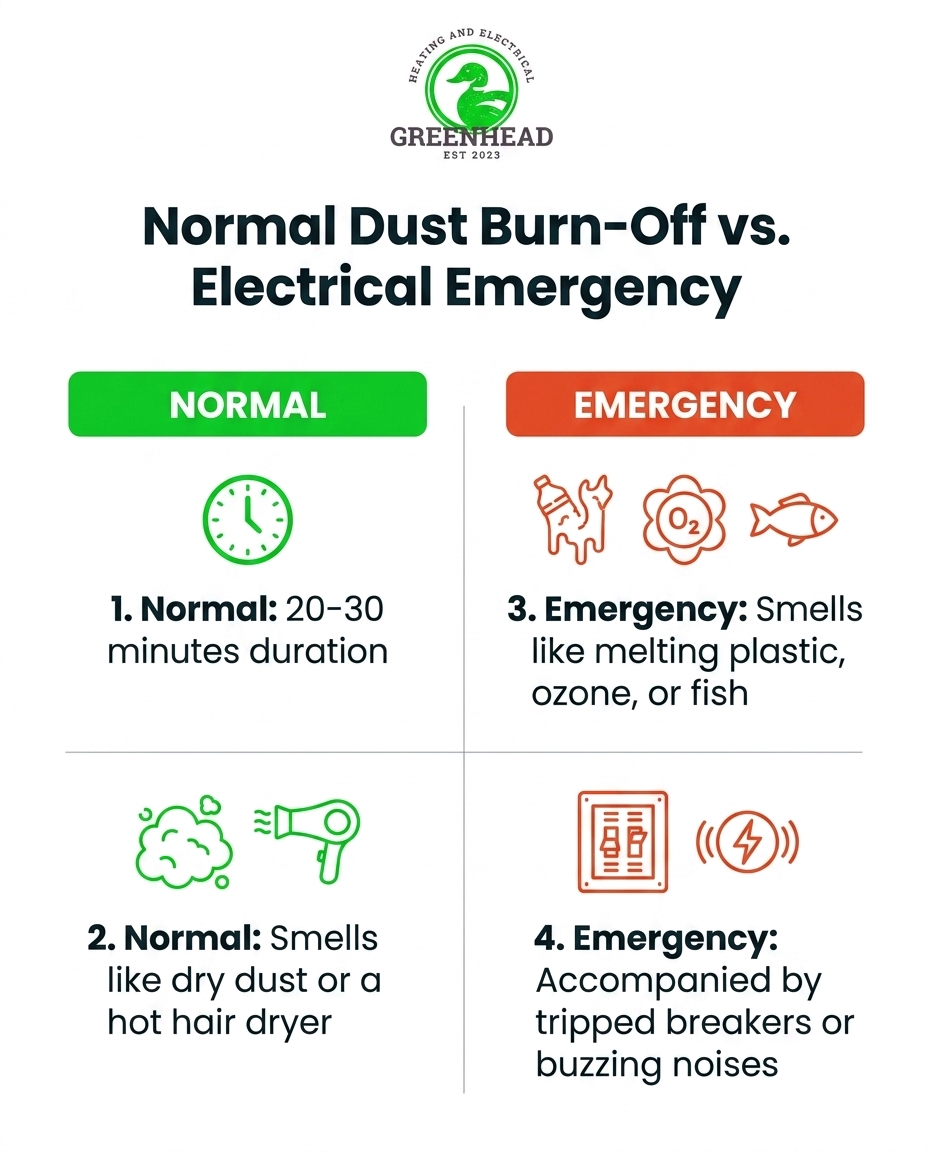
While a brief dusty smell is harmless, a true electrical wiring failure is a severe hazard. Equipping yourself with actionable safety checks allows you to distinguish between a routine seasonal shift and a critical emergency. An electrical issue inside your air handler will often be accompanied by other distinct symptoms, such as tripped breakers, flickering lights, or loud buzzing noises.
As a homeowner in Puyallup and surrounding Pierce County, knowing these distinctions keeps your property safe. Because our team at Greenhead Heating & Electrical holds dual expertise, our dual-licensed HVAC and electrical technicians can safely evaluate both the airflow components and the complex, high-voltage wiring of your auxiliary heat strips.
• Odor Profile — Normal Dust Burn-Off: Dry, dusty, similar to a hot hair dryer or a space heater turning on. — Electrical Emergency: Acrid, melting plastic, sharp ozone, burning rubber, or a "fishy" smell.
• Duration — Normal Dust Burn-Off: Fades entirely within 20 to 30 minutes of continuous heating. — Electrical Emergency: Persists for hours or grows stronger the longer the system runs.
• Accompanying Sounds — Normal Dust Burn-Off: Normal blower motor humming and standard airflow sounds. — Electrical Emergency: Loud buzzing, popping, crackling, or electrical arcing noises.
• System Behavior — Normal Dust Burn-Off: Heats the home normally and cycles off when the temperature is reached. — Electrical Emergency: Trips the dedicated circuit breaker or causes the thermostat to go blank.
Ignoring a persistent electrical smell can lead to severe system damage or immediate fire hazards. If you notice any of the danger signs, shut the system down at the thermostat and review our guide on troubleshooting strange HVAC noises for more context on when to call a professional.
Why Did My Auxiliary Heat Turn On So Early in the Season?
We often see homeowners caught off guard when the burning smell happens in early fall. You might assume the primary heat pump should handle mild autumn weather without needing the high-powered auxiliary strips. However, the system is operating exactly as designed based on specific temperature differentials.
The thermostat trigger: Auxiliary heat automatically engages when the thermostat detects an indoor temperature drop of 2 to 3 degrees below your set point. The system recognizes that the primary heat pump alone cannot bridge that temperature gap quickly enough, so it calls in the backup strips to play "catch up."
The regional weather factor: The distinct shift to damp, cool upper-40s mornings in early September creates the exact rapid indoor temperature drop that triggers auxiliary heat. If you leave your windows open overnight or your insulation allows the house to cool down quickly, the indoor temperature easily slips past that 3-degree threshold before you even wake up.
Manual overrides: Your thermostat settings can also manually force the auxiliary strips to kick on. If you wake up cold and bump the thermostat up by five degrees all at once, you will instantly hit the auxiliary heat strip engagement temperature. The system reads that large demand and activates every heating element it has to satisfy your request, resulting in that sudden burning dust smell.
What NOT to Do When You Smell Burning From the Vents
When you smell burning, the instinct to investigate and fix the problem is strong. However, modern HVAC systems contain high-voltage components that present serious safety risks for untrained individuals. Providing critical safety warnings is vital to prevent dangerous DIY interventions.
• Never attempt to open the air handler: Do not try to access and clean the auxiliary heat strips yourself. These components carry 240 volts of electricity and can cause severe or fatal shocks even if you think the system is off.
• Keep liquids away: Do not pour water, spray standard household cleaners, or use compressed air near the HVAC unit to clear out the smell. Moisture and high-voltage electricity are a disastrous combination.
• Kill the power safely: If you suspect an electrical fire, turn off the system at the thermostat first, and then immediately flip the dedicated circuit breaker in your main electrical panel.
• Rely on emergency professionals: If the smell falls into the "danger" category—like melting plastic or ozone—call a professional immediately. For instance, our team recently received a call from a local customer on a chilly autumn morning when their heating system failed unexpectedly with faulty components. Instead of attempting a dangerous workaround, they called us for emergency service. Our technician arrived the same day, safely diagnosed the hazard, and resolved the issue.
Living in Puyallup and surrounding Pierce County means you have access to qualified technicians who can handle these hazards safely. Never compromise your home's safety to save a few minutes of troubleshooting.
Preparing Your System for the Chilly Months Ahead
Transitioning from troubleshooting a specific panic to proactive seasonal maintenance is the best way to ensure a comfortable, stress-free winter. Taking action in the early fall prevents these alarming smells and protects your equipment from unnecessary wear and tear.
Schedule a pre-season tune-up: A professional technician can safely clean off the auxiliary strips during a fall maintenance visit, removing the dust before the system ever needs to turn them on. This completely bypasses the burning smell on that first chilly September morning in the PNW.
Prioritize filter changes: Changing your air filters in early fall prevents excessive dust from circulating through the ductwork and reaching the heating elements. A clean filter also improves airflow, helping the primary heat pump run more efficiently so it relies less on the auxiliary strips.
Request an electrical inspection: Having a professional inspect the electrical connections, tighten loose wires, and test the amp draw ensures safe operation all winter long. Proactive support makes a massive difference. For example, our installers recently helped a customer who realized they needed to condition an additional space months after an initial installation. We evaluated the area and suggested a slim ducted system over standard split units, providing a clean, professional solution that perfectly matched their needs.
Taking these steps gives you the peace of mind that comes from knowing your system is ready for the cold. If you need assistance getting your system prepped, explore our Puyallup HVAC services today.
Get Expert Answers for Your Heating System
Waking up to a burning smell is never a pleasant experience, but understanding the mechanics behind your HVAC system can turn panic into relief. A 20-minute dust smell is a normal part of the seasonal transition, but persistent electrical odors—like melting plastic or sharp ozone—require immediate professional attention.
If you live in Puyallup and surrounding Pierce County and are ever in doubt about the safety of your heating system, always prioritize caution. Shut off the system, flip the breaker, and contact local experts for a thorough inspection to ensure your home remains safe and warm all winter long.
Frequently Asked Questions
How long does the burning dust smell last when turning on the heat?
A normal dust burn-off typically lasts between 20 and 30 minutes of continuous operation. During this time, the accumulated summer debris on the heating elements vaporizes. If your system short-cycles, you might notice the smell faintly over the first few heating cycles of the season. However, if the odor persists for hours, you should turn off the unit and call a professional.
What does an electrical fire smell like vs burning dust?
Burning dust smells dry and dusty, very similar to a standard space heater or a hot hair dryer turning on. In contrast, an electrical fire produces a harsh, acrid odor that smells like melting plastic, burning rubber, sharp metallic ozone, or even a strange "fishy" scent. If you detect any of these chemical or melting odors, shut down the system at the breaker immediately.
Why did my auxiliary heat turn on?
Auxiliary heat turns on automatically when your indoor temperature drops 2 to 3 degrees below your thermostat's set point. The system uses these electric heat strips to quickly bridge the temperature gap when the primary heat pump cannot keep up. You can also trigger it manually by raising the thermostat temperature by several degrees all at once.
Is it normal for a heat pump to smell like burning?
Yes, it is completely normal for a heat pump to smell like burning dust the very first time it switches into heating mode for the season. This happens because dust settles on the internal auxiliary heat strips during the summer cooling months. When those strips finally heat up in the fall, the dust incinerates, creating a temporary odor.
Can dirty filters make the burning dust smell worse?
Yes, running your system with dirty or clogged air filters allows more airborne debris to bypass the filter and settle directly onto the heating coils. This thicker layer of dust creates a much stronger and longer-lasting burning smell when the heat finally kicks on. Replacing your filters regularly minimizes the amount of debris that reaches the internal components.
Should I turn off my heat pump if it smells like burning plastic?
Absolutely. A burning plastic smell is never part of a normal seasonal burn-off and usually indicates melting wire insulation, a failing capacitor, or an overheating blower motor. You should immediately turn off the system at the thermostat, flip the dedicated circuit breaker to cut the power, and contact a licensed HVAC technician for emergency service.
.svg)